


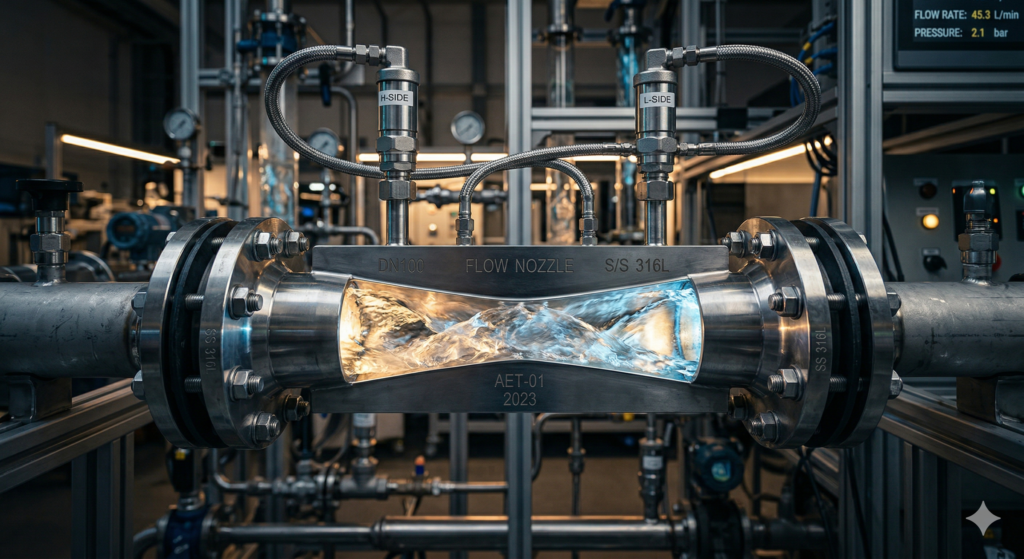
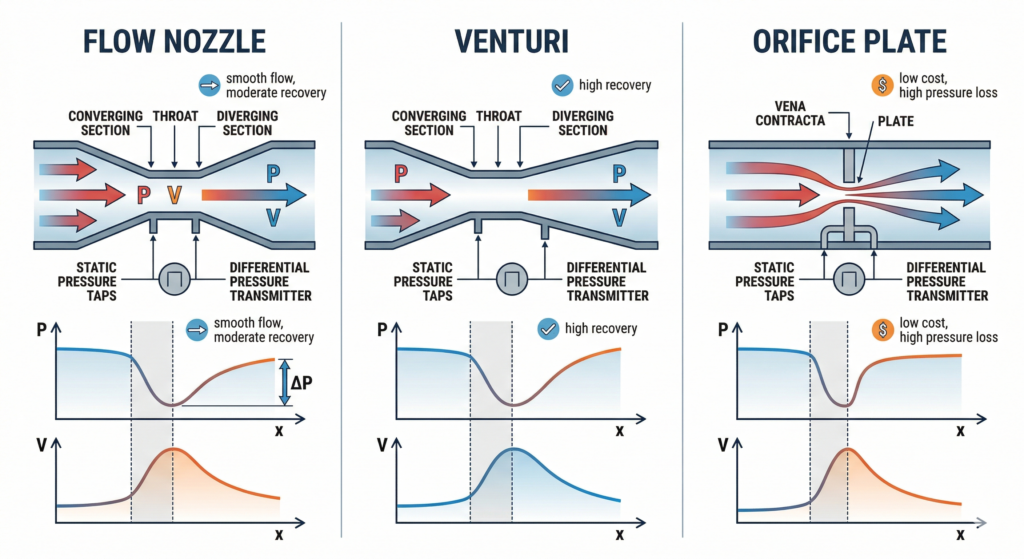
Accurate flow measurement is one of the most essential factors in maintaining efficiency, safety, and process control in industrial piping systems. Whether in oil and gas, power generation, water treatment, or chemical processing, selecting the right flow measurement device directly affects performance and operational reliability. Among the most commonly used differential pressure flow measurement devices are flow nozzles, venturi tubes, and orifice plates. Although all three operate on similar principles, they differ significantly in design, accuracy, pressure loss, and application. Understanding these differences helps engineers and decision-makers choose the most suitable solution for their specific needs
What is a Flow Nozzle?
A flow nozzle is a device used to measure the flow rate of fluids in a pipeline. It is a convergent-divergent nozzle that creates a differential pressure across the nozzle to determine the flow rate based on Bernoulli’s principle. Its design allows accurate measurement of high-velocity flows with relatively low pressure loss. Flow nozzles are commonly designed and applied in accordance with ASME PTC 19.3, which provides guidelines for accurate flow measurement using differential pressure devices, ensuring reliable performance especially in high-velocity and steam flow applications.
Types of Flow Nozzles:
Long Radius & ISA-1932
Characteristics of Flow Nozzles:
- Durable
- High Accuracy
- Low Maintenance
- Low Pressure Loss
Common Applications:
- Chemical processing
- HVAC systems
- Oil and gas
- Water and wastewater treatment
- Shipbuilding
- Pharmaceuticals
- Food and beverage processing
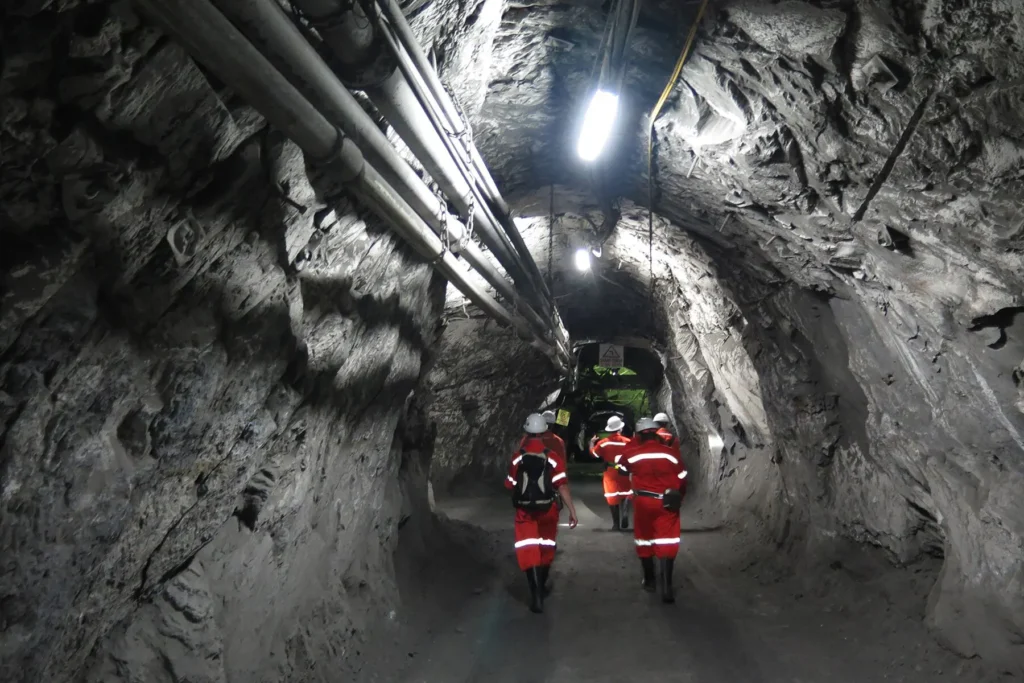
- Mining
- Power generation
- Fertilizers
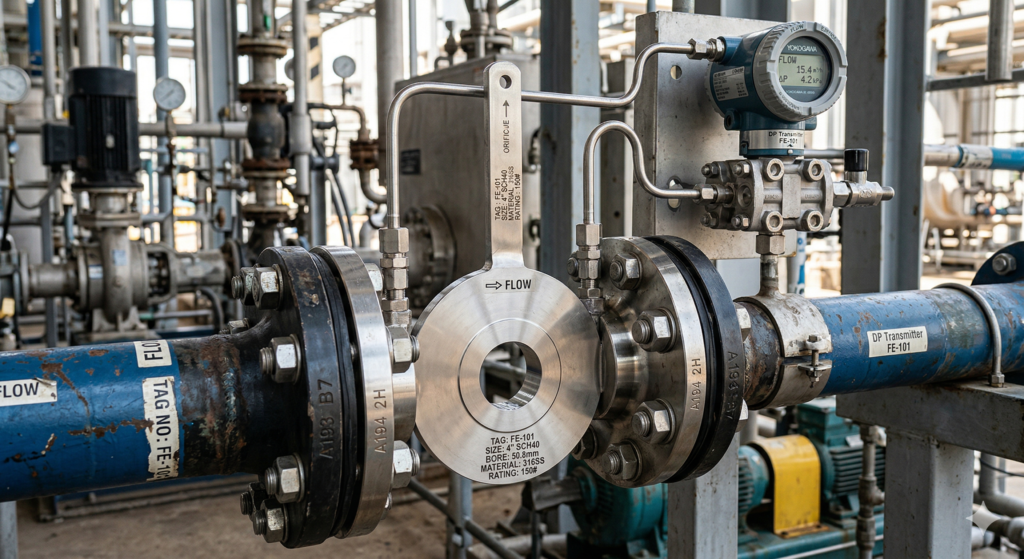
What is an Orifice Plate?
Orifice plates are fundamental devices used in fluid dynamics to measure flow rates, reduce pressure, and control flow within pipelines. They work on the principle of differential pressure, where fluid passing through a restriction creates a pressure drop that is used to calculate flow rate.
Types of Orifice Plates:
Concentric Square Edge
Eccentric Orifice Plate
Conical Entrance
Segmental
Quadrant Edge
Multi-hole
Single-hole
Characteristics of Orifice Plates:
- Highly Accurate
- Relatively less expensive compared to other flow meters
- Low maintenance cost
- Easily replacement
- Less susceptible to damage
- Various designs for various processes
- Relatively compact compared to other flow meters
- It is usually thin enough to fit between an existing pipe/flange
- Can be installed in a vertical, horizontal or inclined pipe
- Can determine a wide range of flow rates
- Simple flow meter with an intricate design
Common Applications:
- Chemical processing
- HVAC
- Oil and gas
- Water and wastewater treatment
- Shipbuilding
- Pharmaceuticals
- Food and beverage processing
- Mining
- Power generation
- Fertilisers
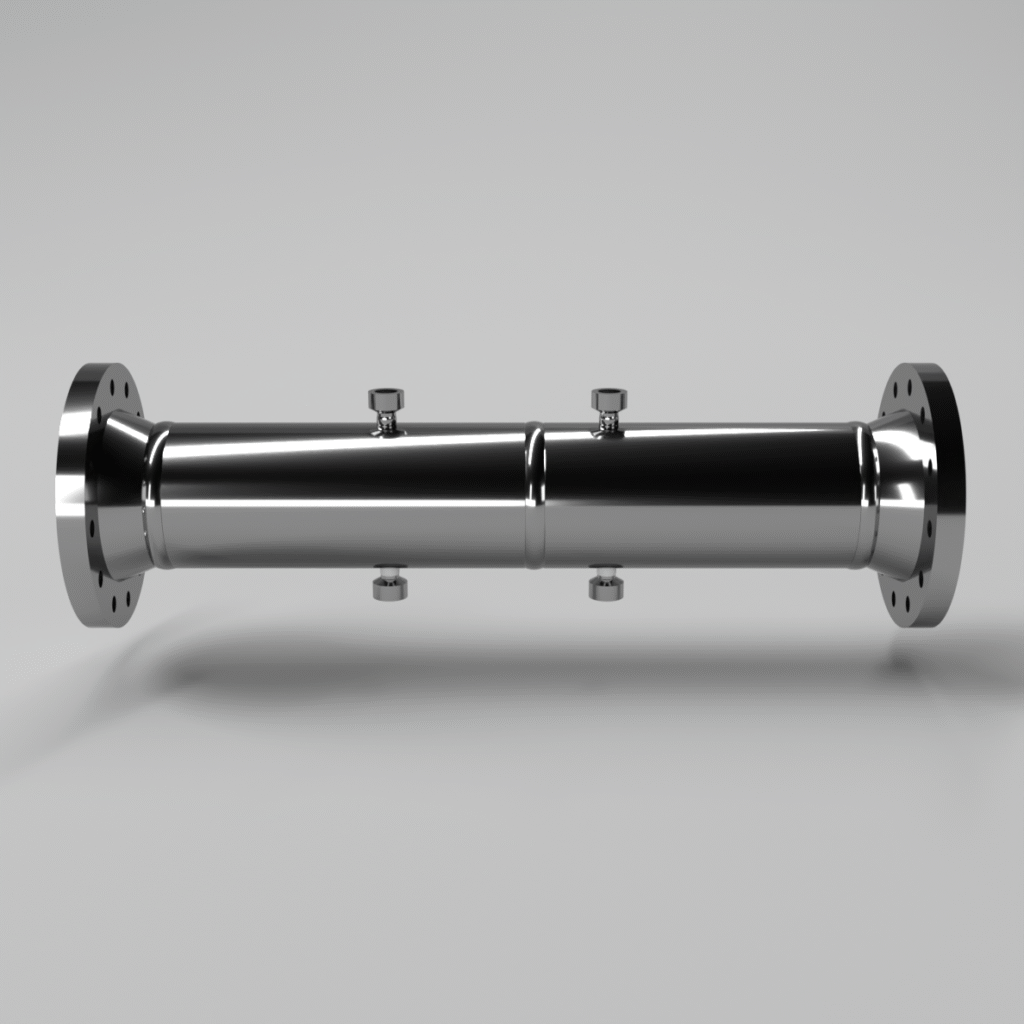
What is a Venturi?
A Venturi tube is a device used to measure fluid flow rates or to create a pressure differential in pipelines. It operates based on the Venturi effect, where fluid velocity increases and pressure decreases as it passes through a narrowed section of pipe. The resulting pressure difference is used to calculate flow rate.
Types of Venturi:
- Fully Machined
- Classical Venturi- Fabricated
- Steam Jacketed Type•
- Bi-directional
Characteristics of Venturi Meters:
- Very low pressure loss
- High accuracy and repeatability
- Suitable for large pipe diameters
- Performs well with dirty or slurry fluids
- Higher initial cost compared to orifice plates
Common Applications:
- Chemical processing
- HVAC
- Oil and gas
- Water and wastewater treatment
- Shipbuilding
- Pharmaceuticals
- Food and beverage processing
- Mining
- Power generation
- Fertilizers
FAQs
A flow nozzle is preferred in high-velocity or high-temperature applications, such as steam flow measurement, where better durability and lower pressure loss are required.
Venturi meters have the lowest pressure loss among the three, making them ideal for systems where energy efficiency is critical.
Orifice plates are the most cost-effective option due to their simple design, ease of installation, and low manufacturing cost.
Not Sure Which Device Fits Your Application?
Our experts can help you choose between flow nozzles, Venturi tubes, and orifice plates based on your exact process conditions.